
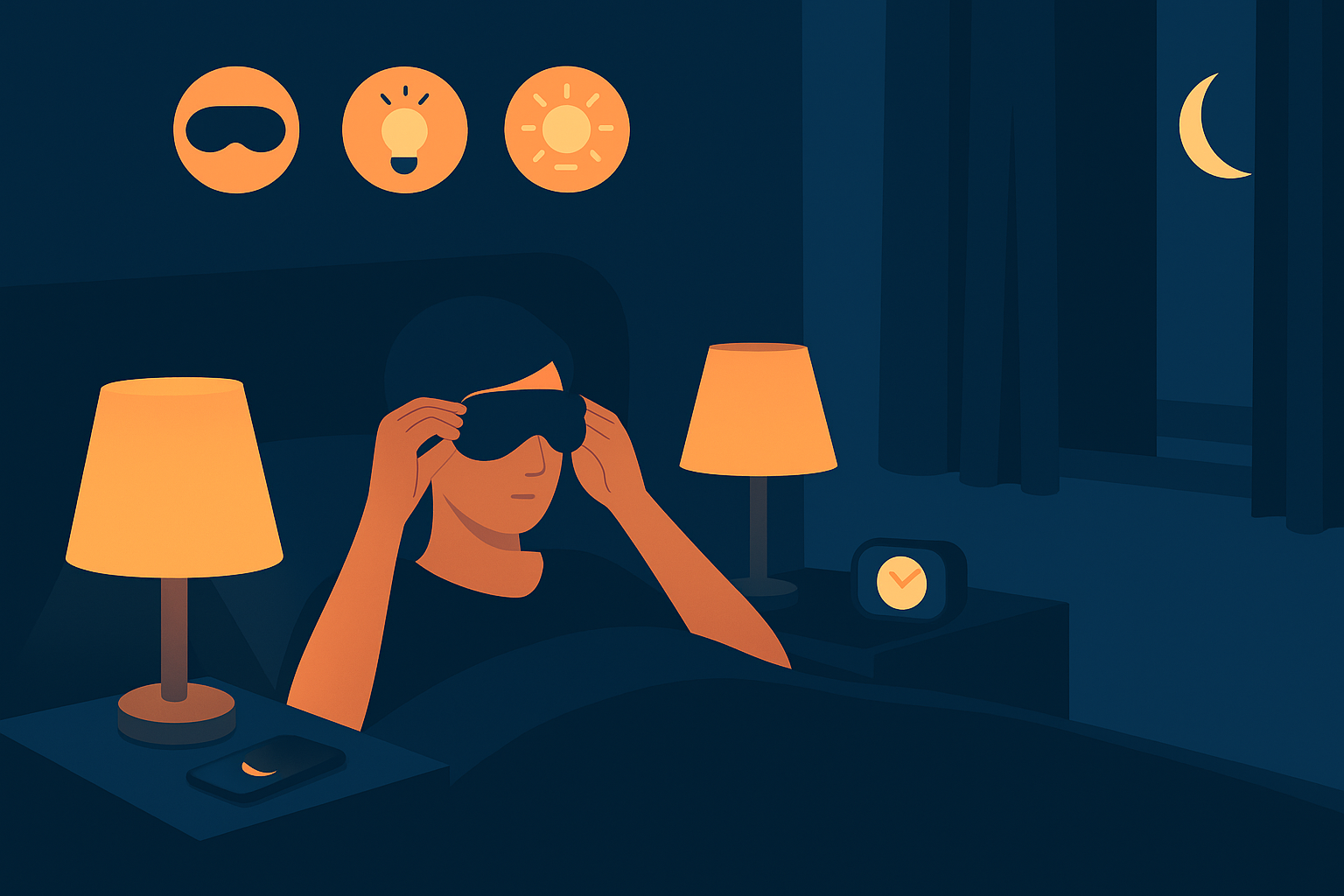
Evening light sets the tone for your sleep. Bright rooms and glowing screens tell your body it’s time to stay alert; softer light helps you wind down. You don’t need blackout shutters or a tech overhaul—just a calmer glow in the evening and a darker bedroom when it’s time to switch off.
Think about a typical night: kitchen lights blazing, telly still on, phone in hand while you brush your teeth. None of that is “wrong”, it just keeps your body clock guessing. A few small tweaks can make the whole evening feel quieter and sleepier without changing your routine much.
The aim is simple: low, warm light before bed; proper darkness in the bedroom; bright light after you wake. Do what you can, keep what works, and leave the rest.
In the evening
Keep light low and warm so your brain can ease into night mode.
- Use lamps instead of the bright ceiling light.
- Pick warm-white bulbs (around 2700–3000K).
- Set phones and laptops to night mode and nudge brightness down.
- Try a 30–60 minute screen-free buffer before bed—podcast, audiobook or paper book works well.
Nice-to-have helpers: a simple smart bulb scene for “Evening”, or a table lamp you switch on after dinner and leave the big lights off.
In the bedroom
Aim for “dark enough that you can’t read a page without a light”.
- Blackout curtains stop streetlights and early sunrise.
- A comfy eye mask is an easy win if you share a room or travel.
- Cover tiny LEDs on chargers and kit; a bit of tape does the job.
- For night-time loo trips, use a low-glare night light rather than switching on the bathroom light.
In the morning (and for shift work)
Bright light after waking helps your body feel alert at the right time.
- Open the curtains straight away; if you can, step outside for 10–20 minutes.
- Dark winter mornings? A dawn-simulating alarm can make wake-ups kinder.
- If you work nights, keep the bedroom dark for daytime sleep and use brighter light when you need to be alert.
Useful products
These aren’t cures; they’re simple tools that help you keep evenings dim and bedrooms dark.
- Eye mask (sleep mask) – instant darkness, great if you share a room or travel.
Look for: contoured shape (no eyelash pressure), soft strap, nose bridge to block leaks, washable cover.
Shop:/shop/light-solutions/eye-masks/ - Blackout curtains or liners – stop streetlights and early sunrise.
Tips: choose wider than the window, hang high, and overlap the centre. - Stick-on blackout blinds / travel kits – handy for rentals and kids’ rooms; go up and down in seconds.
- Warm-white smart bulbs (≈2700–3000K) – one-tap “Evening” scene and easy dimming.
Also useful: a smart plug for a bedside lamp on a schedule. - Low-glare night light (amber, very dim) – enough to see for night-time loo trips without fully waking.
- Dawn-simulating alarm clock – a gentler rise on dark mornings; set a 30–60 minute light ramp.
- Light-leak fixes – wraparound curtain poles, magnetic side tracks, window seal/blackout tape, and a door draft/light blocker.
- Dimmable bedside clock – display that goes very low or off.