
Waking hot and tossing off the duvet? Or curling up cold at 3am? Temperature swings make it harder to drift off and stay asleep. The goal isn’t a laboratory reading — it’s a comfortable, steady climate that feels the same from lights-out to wake-up.
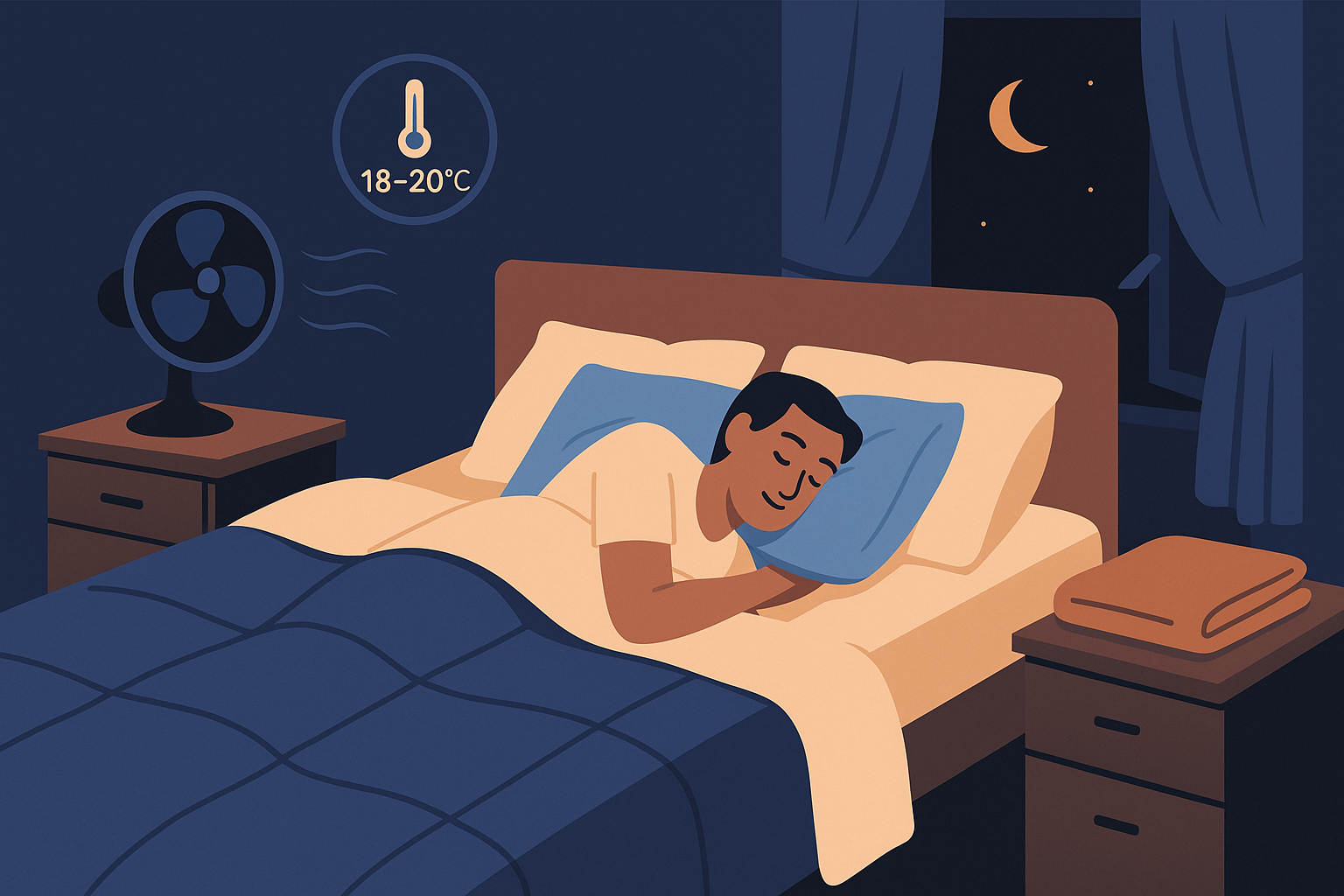
Many people sleep best with the room on the cooler side, roughly 18–20°C. That won’t suit everyone, so treat it as a starting point. Make a couple of small changes, then see how you feel over a few nights.
The plan below keeps things simple: set the room, sort the bedding, add small helpers.
Quick wins tonight
- Lower the thermostat an hour before bed so the room cools gently.
- Crack a window for a few minutes to swap stale air for fresh (if safe and comfortable).
- Dim lights early — cooler rooms often feel cosier with warm lighting.
- Keep a light throw within reach so you can add, not just remove, warmth at 3am.
Set the room
- Target a stable temperature around 18–20°C, adjusting to comfort.
- Airflow helps. A quiet fan on low can even out pockets of warm air.
- Mind humidity. Most people feel better somewhere near 40–60% RH. If the room is damp, air it; if it’s too dry in winter, a small humidifier can soften the air.
- Block draughts at the door and windows so the climate you set actually stays put.
Bedding and sleepwear
Think layers you can tune, not one heavy solution.
- Duvet togs: summer 4.5 tog, spring/autumn 7.5–10.5 tog, winter 13.5 tog (mix and match if your house runs warm or cool).
- Breathable fibres for sheets and covers (cotton, bamboo, Tencel/lyocell) help moisture move away from the skin.
- Cooling pillows or a breathable pillow protector stop heat building around the head and neck.
- Moisture-wicking sleepwear keeps you more comfortable if you run hot or get night sweats.
- Couples: consider separate duvets or a split-weight duvet so each person gets the warmth they like.
Useful products (to make this easy)
Chosen to support the habits above — simple helpers, not cures.
- Cooling pillow – keeps the head area from overheating.
- Breathable sheet set (cotton, bamboo or Tencel) – better moisture handling.
- Temperature-regulating duvet (different togs or split options) – tune warmth through the year.
- Cooling mattress topper – reduces heat build-up from memory foam.
- Quiet desk or pedestal fan – gentle airflow without a gale.
- Moisture-wicking sleepwear – helpful for warm sleepers and night sweats.
- Door draught blocker – keeps your set temperature more stable in older homes.
- Small humidifier/dehumidifier (as needed) – comfort boost in very dry or damp rooms.
- Heated throw or hot-water bottle (winter) – local warmth so you can keep the room cooler.
Shop categories: Temperature solutions → /shop/temperature-solutions/ · Bedding basics → /shop/bedding/
Key takeaways
- Aim for a cool, steady bedroom; tweak towards what feels right.
- Use layers and breathable fabrics so you can adjust without starting over.
- Small helpers (pillows, fans, draught blockers) keep the climate consistent.
- If sleep stays difficult for months, or you’re dealing with troublesome night sweats, it’s sensible to speak to your GP for personalised advice.