
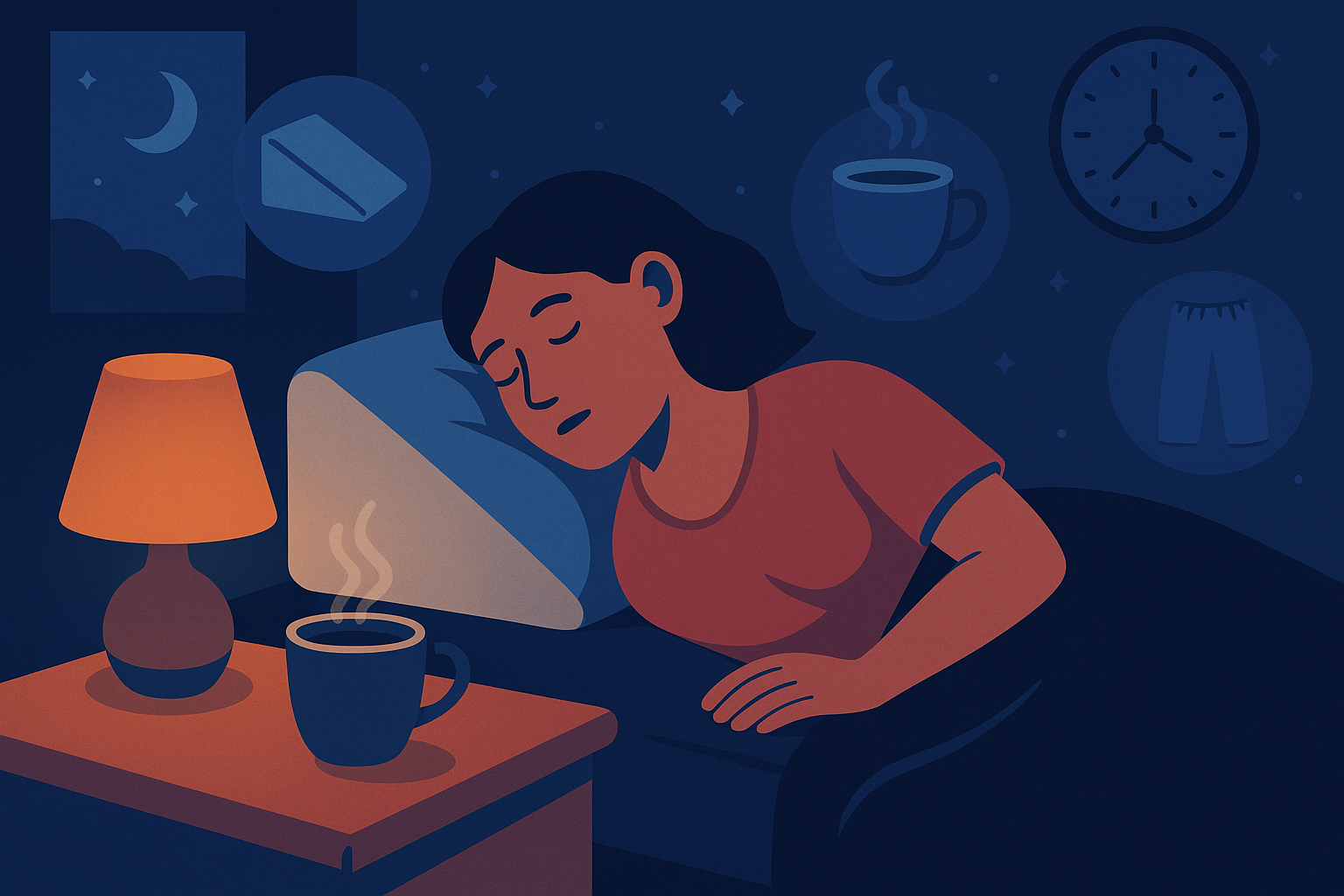
A busy stomach can keep your brain wide awake. Lying down too soon after eating, spicy or fatty meals, and late drinks can all make nights uncomfortable. The aim here is simple: lighter evenings, kinder sleep positions, and a calm routine so your body has time to settle.
Everyone’s different, so treat these as friendly pointers rather than rules. Keep what helps and ignore the rest.
Quick wins tonight
- Leave 2–3 hours between your last main meal and bedtime.
- Keep dinner lighter and try a smaller portion size.
- Prop your upper body slightly rather than stacking pillows under your head.
- Keep the bedroom cool and avoid tight waistbands or restrictive sleepwear.
Evening habits that help
- Meal timing: Aim for earlier, unhurried dinners. Snack small if you’re hungry later (plain yoghurt, banana, a few crackers).
- Pace: Eat slowly and pause between courses. A short stroll after dinner can feel good.
- Clothes: Choose loose, breathable layers so nothing presses on your middle.
- Stress: A simple wind-down (breathing or journalling) can reduce tension that often goes hand-in-hand with stomach discomfort.
Food & drink pointers (gentle, not prescriptive)
People report fewer flare-ups when they go easy on rich, spicy or very acidic foods at night.
Caffeine, chocolate, fizzy drinks and alcohol close to bedtime can feel harsher for some.
Herbal options are a mixed bag: ginger or fennel can feel soothing; peppermint doesn’t suit everyone as some people find it worsens reflux. Try small amounts and see how you get on.
Sleep position & bedroom set-up
- Elevate your upper body, not just your head. A wedge pillow or bed risers under the head of the bed can help gravity keep things where they should be.
- Side-sleeping is often more comfortable than flat on your back.
- Keep the room cool (around 18–20°C) and avoid very heavy duvets that make you hot and restless.
- Have a low-glare night light for loo trips so you don’t fully wake with bright light.
Useful products (to make the habits easy)
Chosen as helpers for the tips above — not cures.
- Wedge pillow – gentle upper-body elevation without stacking pillows.
- Bed risers (head end) – a subtle, fixed incline for the whole bed.
- Breathable sleepwear – looser fit with soft waistbands.
- Cooling pillow or topper – keeps you comfortable if you tend to overheat.
- Gentle herbal blends (ginger/fennel) – a warm, caffeine-free evening option.
- Low-glare night light – enough to see without waking fully.
Shop categories: Reflux & digestion → /shop/reflux-digestion/ · Temperature solutions → /shop/temperature-solutions/
When to look wider
If discomfort is frequent, painful, or comes with weight loss, swallowing problems, or persistent cough, it’s sensible to speak to your GP for personal advice.
You may also find these helpful:
- Stress & racing thoughts →
/advice/stress-wind-down/ - Room temperature →
/advice/bedroom-temperature/ - Light exposure →
/advice/light-and-sleep/
Key takeaways
- Give your stomach time to settle before bed.
- Choose lighter evening meals and looser layers.
- Try gentle elevation and a cool room for comfort.
- Use simple tools to make the routine stick.
Next step: Want suggestions tailored to you? Try the Sleep Quiz → /sleep-quiz/