
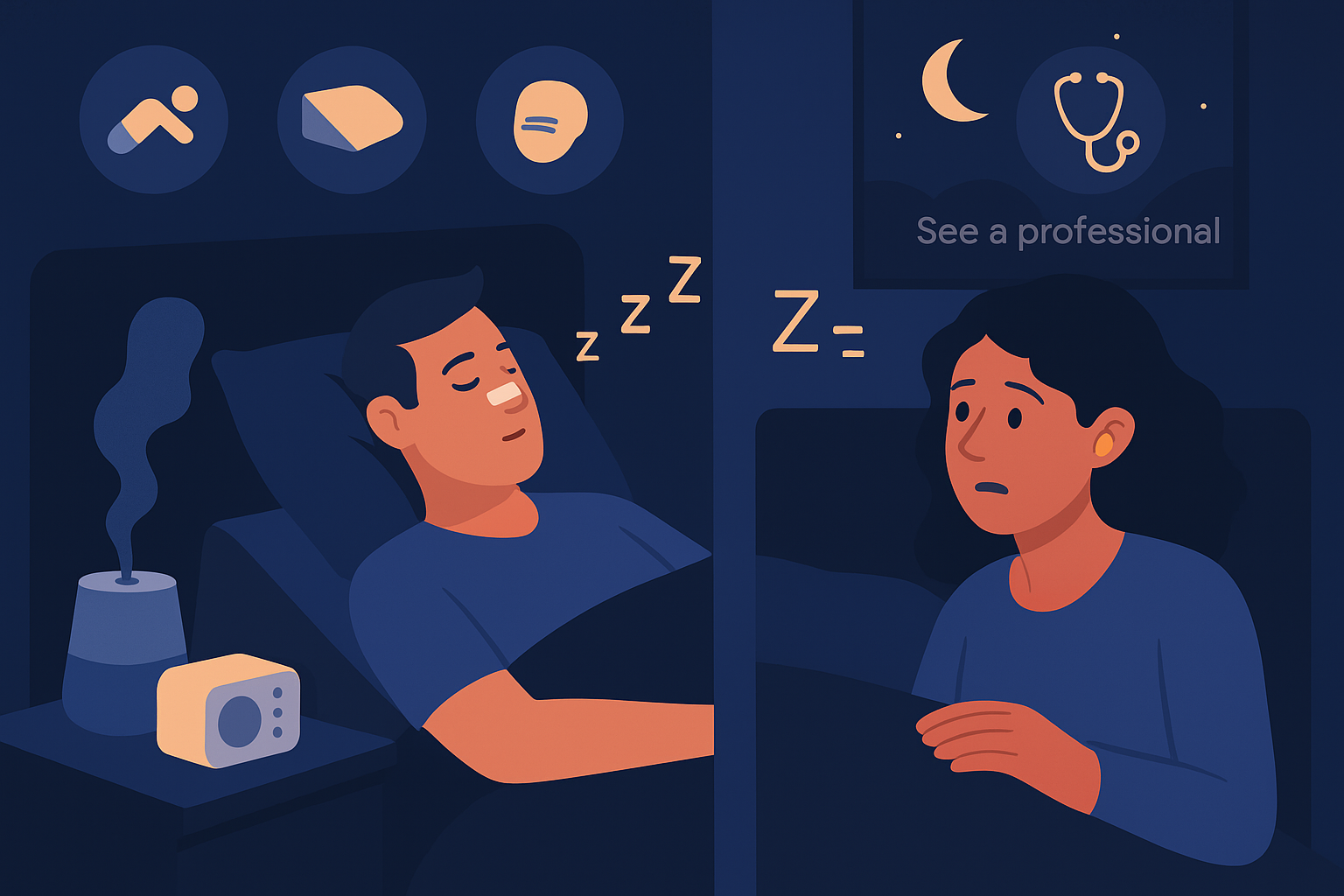
Snoring is common and often louder than the person doing it realises. For many homes the aim is simple: easier breathing and a calmer bedroom. Small changes can help. Sometimes, it’s sensible to get professional advice.
Quick wins tonight
- Sleep on your side. Snoring is often worse on your back. A body pillow makes side-sleeping easier.
- Raise your upper body slightly. A wedge pillow or gentle bed incline can help keep the airway more open.
- Keep the nose clear. Try a saline spray/rinse and consider nasal strips or a soft nasal dilator.
- Go easy on alcohol late in the evening. Many people notice snoring is louder after drinks.
- Cool, comfortable room. Around 18–20°C and not too dry; a humidifier can help in very dry homes.
- If you’re the partner: protect your sleep with earplugs or a white-noise machine.
Gentle tweaks over a week
- Evening routine: lighter dinner, earlier finish, and a calm wind-down.
- Allergies & dust: wash pillow protectors regularly; keep pets off the bed.
- Nasal breathing: if you’re often blocked, simple nasal care (saline, strips) can make nights easier.
- Consistent sleep window: regular bed/wake times can reduce overtired, noisy nights.
Note: We don’t suggest mouth-taping. If you’re worried about mouth breathing, focus on gentle nasal care and speak to a professional for personalised advice.
When to speak to a professional
It’s sensible to chat to your GP or dentist if you notice any of the following:
- Snoring most nights, very loud, or heard through closed doors
- Breathing pauses, choking or gasping during sleep (often noticed by a partner)
- Severe daytime sleepiness, morning headaches, or waking with a very dry mouth
- Snoring in children most nights
- Snoring that continues despite simple tweaks
A GP may discuss next steps, which can include a home sleep assessment. Dentists can advise on custom oral appliances (professionally fitted mouthpieces) where appropriate.
Useful products (simple helpers)
Chosen to support the steps above — tools, not cures.
- Nasal strips / soft nasal dilator – encourage easier nasal airflow.
- Saline spray or rinse bottle – clear dryness and evening congestion.
- Wedge pillow – gentle torso elevation without stacking pillows.
- Body pillow / side-sleeping pillow – helps you stay off your back.
- Humidifier (for very dry rooms) – keeps nasal passages comfortable.
- White-noise machine or earplugs – protect a partner’s sleep while you experiment.
- Anti-snore pillow – some people find the shape helpful; choose one with a good return policy.
Shop categories: Snoring & breathing → /shop/snoring-breathing/ · Noise solutions → /shop/noise-solutions/ · Temperature solutions → /shop/temperature-solutions/
Key takeaways
- Start with side-sleeping, gentle elevation, and clear nasal airflow.
- Keep the room cool and comfortable; go easy on late alcohol.
- If snoring is loud, regular, or comes with breathing pauses or daytime sleepiness, it’s wise to speak to a professional.
- Use simple products to support the habits — they make changes easier to keep.
Next step: Want tailored suggestions? Try the Sleep Quiz → /sleep-quiz/