
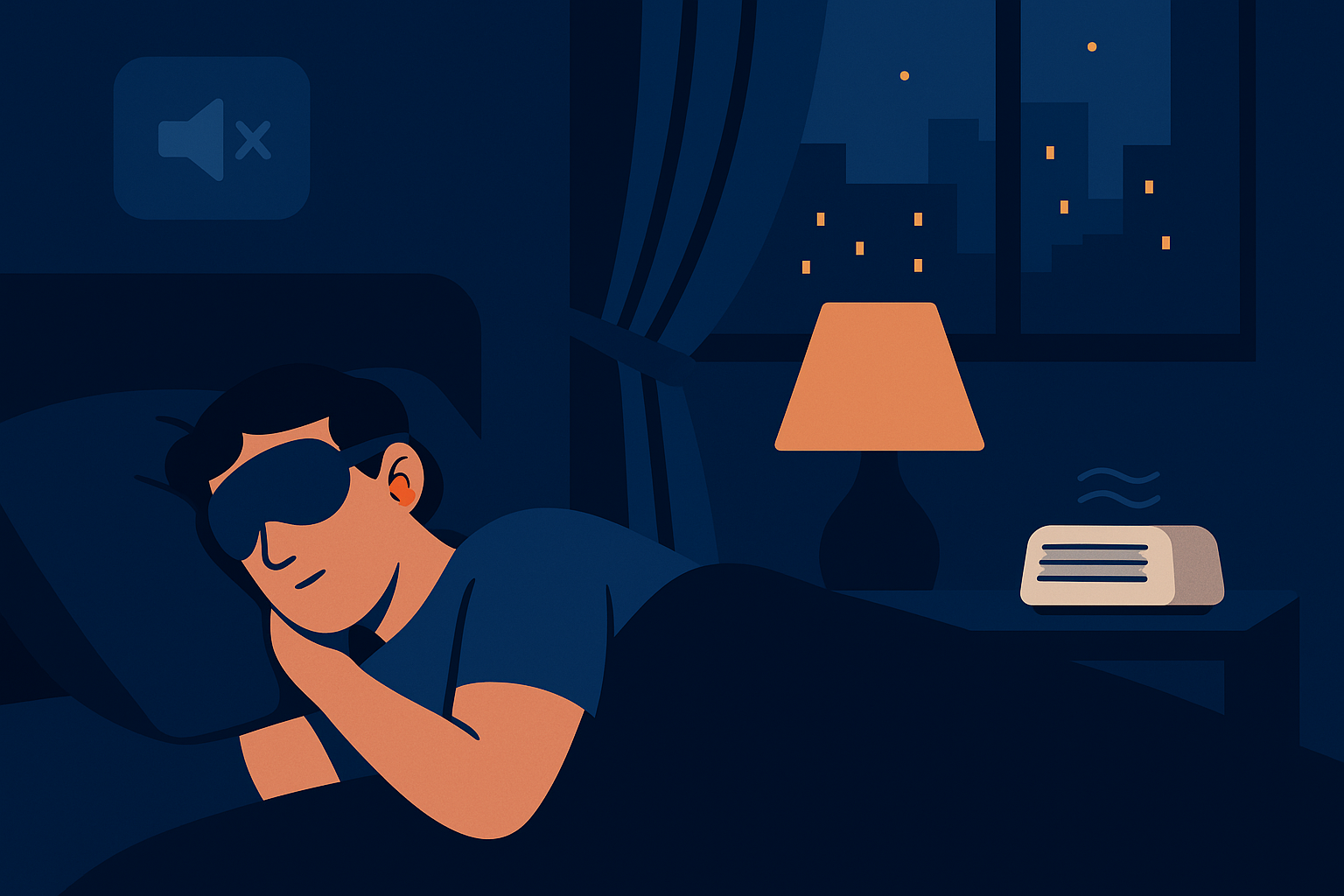
Sudden or irregular sounds make it hard to switch off. Your brain treats each honk, door slam or late-night laugh as something to check. The aim isn’t silence; it’s a steady, calm background that doesn’t demand attention.
Think of your bedroom like a thermos for quiet. You soften hard edges, close the gaps where sound sneaks in, then add a gentle, constant sound so small bumps fade into the backdrop.
Do what you can with the space you have. Small fixes often add up.
Soften the room (reduce and absorb)
- Shut the gaps. Seal little draughty spaces: window strips, a thick door mat, an under-door blocker.
- Add soft surfaces. Rugs, curtains, cushions and a fabric headboard soak up echoes.
- Re-arrange if needed. Move the bed away from the noisiest wall; a bookcase against a shared wall can help.
- Close the loop. Heavy blackout curtains also muffle some street noise.
Mask the rest (make noise predictable)
Your goal is a consistent, low sound that makes irregular noises less noticeable.
- White noise or fan sound works well because it doesn’t change.
- Keep the volume comfortable — enough to blur bumps, not blast them. You should still hear your alarm.
- If nature sounds help, pick steady rain rather than birds or waves (they vary more).
- Headband sleep headphones can be handy if you share a room.
If a partner snores, a two-step approach helps: a steady masker in the room, then earplugs for the peaks.
Night routine
- Set your masking sound before lights out so the room feels settled.
- If you use a timer, fade gently rather than an abrupt stop.
- Keep notifications off and the phone face-down.
Useful products
Chosen to support the steps above — tools, not cures.
- Earplugs (foam, silicone or wax) – quick, portable protection; try a few sizes to get the seal right.
- White noise machine – reliable, loop-free sound; set a comfortable low volume.
- Headband sleep headphones – good for shared rooms and side sleepers.
- Under-door draught/light blocker – fills the biggest sound gap in many bedrooms.
- Blackout curtains/liners – add mass at the window and help with early light too.
- Rug or thick underlay – softens echoes on hard floors.
Shop categories: Noise solutions → /shop/noise-solutions/ · Bedroom basics → /shop/light-solutions/