
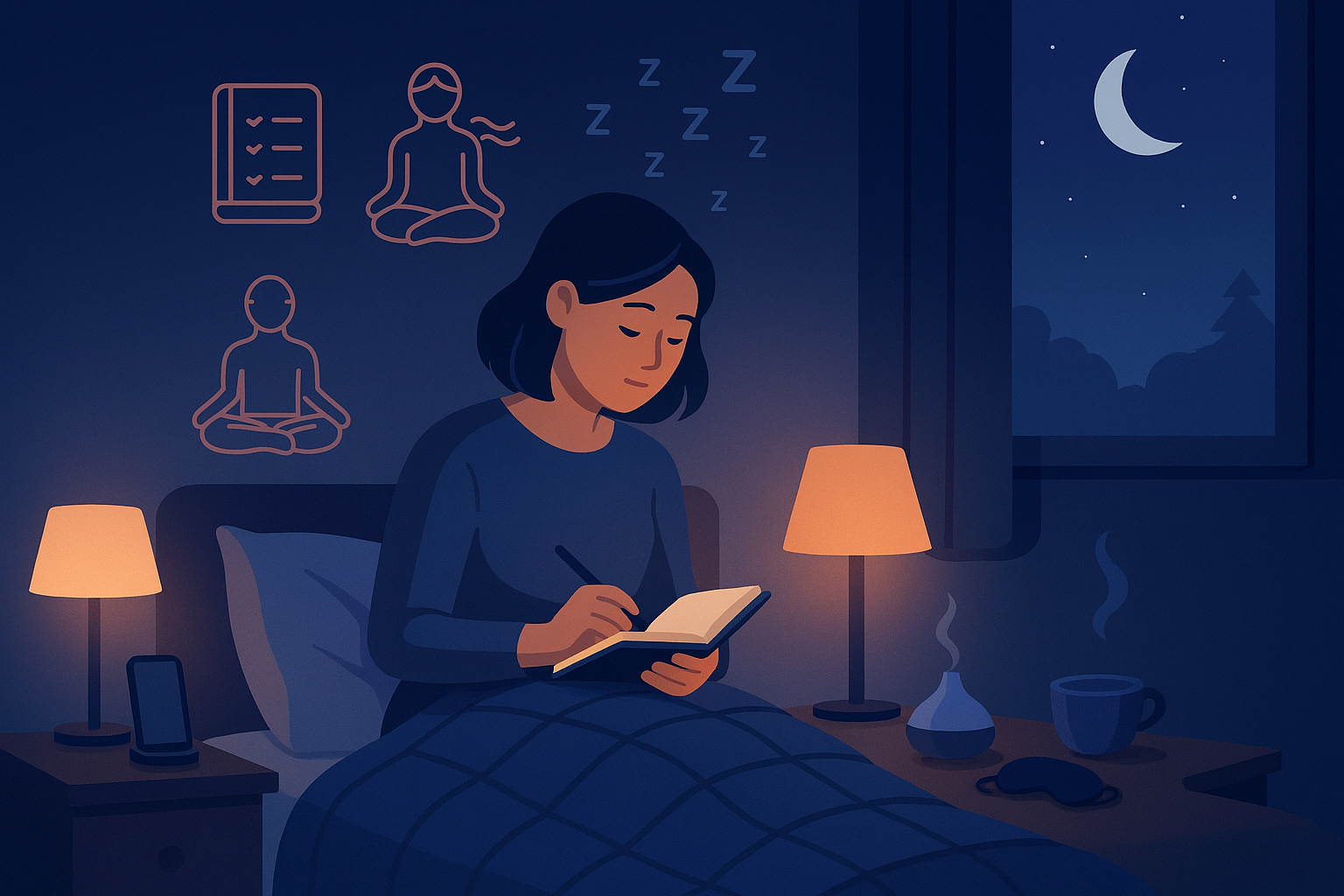
It’s late. You’re shattered, yet your brain is drafting emails, replaying chats, and planning tomorrow. If that’s you, these calm, repeatable routines can help your mind and body agree it’s time to sleep.
Why stress keeps you awake
When you’re stressed, your nervous system stays on alert. That means:
- Racing thoughts and mental “what-ifs”
- Faster heart rate and shallow breathing
- Cortisol up, melatonin down, so falling asleep takes longer and sleep feels lighter
This isn’t “just in your head” — it’s how the body protects you. The job of a wind-down is to tell your system, we’re safe now.
Quick self-check (30 seconds)
- Thoughts spiral when the lights go out?
- Body feels tired but wired?
- Scrolling close to bedtime?
- Bedroom too bright, noisy or stuffy?
If you’re nodding, a short nightly ritual can help.
Before you start: small tweaks that make a big difference
- Lights: Dim to warm white (≈2700–3000K).
- Screens: Park phones/tablets 30–60 mins before bed.
- Room: Cool (about 18–20°C), quiet, and tidy enough not to nag your brain.
- Caffeine & alcohol: Last caffeine by midday; keep alcohol light and early.
- Consistency: Aim for a regular sleep/wake window.
When to speak to your GP
Loud snoring or gasping, persistent low mood or anxiety, or sleep problems most nights for 3+ months deserve a professional check-in.
Related reading:
Two wind-down routines you can start tonight
Choose one. Keep it gentle, keep it repeatable.
Option A: the 10-minute “busy night” routine
1) Two-minute brain dump (paper, not phone)
Write tomorrow’s three priorities and any worries. Add a heading: “Parked until morning.”
2) Three-minute breathing
In for 4, out for 6, through the nose. If you like structure, try box breathing: 4-4-4-4.
3) Five-minute body scan
Starting at your toes, gently tense then release each muscle group up to your face. Slow and steady.
Why it works: you interrupt mental loops, slow physiology, and give your body clear “sleep now” cues.
Helpful extras (optional):
- Lavender diffuser during breathing
- Sleep journal with prompts for the brain dump
Option B: the 20-minute “full reset” ritual
1) Journalling (7 mins)
- What’s on my mind?
- Tomorrow’s 3 key tasks
- Three things you’re grateful for today
2) Mobility & stretch (5 mins)
Neck rolls, shoulder circles, cat-cow, seated forward fold. Breathe slowly.
3) Guided relaxation (6–8 mins)
Progressive muscle relaxation or a short meditation. Headphones if the house is noisy.
4) Lights down, screen-free (throughout)
Warm lamp only; phone stays outside the room.
Optional kit: weighted blanket (gentle pressure calms the nervous system) and bedtime herbal tea (caffeine-free blends such as chamomile or lemon balm).
If you wake in the night
- After ~20 minutes awake, get up. Low light, quiet activity (book, puzzle).
- No phone.
- Return when sleepy, not on a timetable.
- Jot any new worries on a bedside notepad labelled “Tomorrow’s list”.
Stick with it: a simple 7-night plan
- Nights 1–3: Option A (10 mins)
- Nights 4–7: Option B (20 mins), then keep whichever you prefer
- Protect the same start time each night; routine beats perfection.
Product picks that actually help
Curated because they support the steps above — not as a quick fix.
- Weighted blanket → steady, calming pressure for busy minds
- Aromatherapy diffuser + lavender oil → pairs well with breathing work
- Sleep journal → keeps worries off the pillow
- Bedtime herbal tea (caffeine-free) → gentle cue to wind down
- Contoured sleep mask / blackout curtains → help melatonin do its job
Link to shop categories:
/shop/stress-solutions/ · /shop/light-solutions/
Key takeaways
- Stress ramps up alertness; routines bring it back down.
- Keep it short, repeat nightly, and avoid screens at the end.
- If red flags show up (snoring, persistent low mood, long-term insomnia), book a GP chat.
Next step: Want tailored suggestions? Try the Sleep Quiz → /sleep-quiz/